Listicle
8 min read
Where to Find Shark Teeth on Tybee Island
Five ways to look for fossil shark teeth on and around Tybee, from the north end of the beach to a guided walk and a boat charter, plus the one place where you should look and not take.
Edited by Chirag Tailor
Every kid who visits Tybee eventually asks the same question: can we find a shark tooth? The answer is yes, though not by wandering down to the water at noon and scanning the sand for five minutes. The teeth are fossils, dark and often smaller than a fingernail, and they turn up where the waves sort the heavy bits from the light ones. Finding one is part patience, part tide chart, and part knowing where to bend down.
This list is built for families and anyone who likes a low-stakes treasure hunt. If you're staying with us on Butler Ave, a short walk from South Beach, this is a good thing to build a slow morning around.
1. North Beach, at the north end of the island
If you want to do this yourself, with a bucket and no booking, start at the north end of Tybee, near the rocks and the old battery. It's the best-known spot for public shark-tooth hunting on the island, and the island's guided walks work the same beach. Treat it as the best place to start, not a promise that your pockets will be full.
The detail worth remembering is the weather. The north end is at its best after a storm, when rough water has churned up the beach and left fresh material along the waterline. That doesn't mean you should go out in a storm. It means the morning after a blow, once the water has settled, is worth more than a flat, quiet day.
North Beach is also the quieter end of the island, up toward the lighthouse, which suits this kind of hunt. You'll be walking slowly with your eyes down, and it's easier without a crowd. Our look at which Tybee beach is best for families covers the lifeguard towers and facilities on each stretch, if you want to plan the rest of the beach day around it.
2. The low-tide method, anywhere on the public beaches
This one isn't a place so much as a habit, and it's the thing that matters most. Go on a falling tide and around low tide, and work the shell beds. Those are the strips of broken shell and coarse debris the water leaves in a line along the beach. Teeth are heavy for their size, so they settle in with the shell instead of lying loose on clean sand.
What you're looking for is a small, dark, triangular shape. Fossil teeth are typically black or dark gray, and some are glossy. The first one is the hardest to see. After that your eye adjusts, and you start spotting them among the shell bits quickly.
The timing is tide-driven, so look up the day's predictions before you go. NOAA publishes them for the Fort Pulaski station (8670870), the nearest reference point for Tybee. Find the low tide, and plan to be on the beach for the hour or so before it.
A few practical habits help:
- Walk slowly along the wet edge where the last wave reached, and look at the shell line, not at the open sand.
- Bring something small to hold finds. A pill bottle, a cup or a pocket works, because a tooth in a toddler's fist can end up in the surf.
- Crouch and look at a spot for a moment before moving on. Moving fast is how you miss them.
- Check the tide before breakfast, not on the way out the door. Low tide moves later each day, so the plan changes from one morning to the next.
3. A guided shoreline walk with Tybee Shark Teeth Tours
If you'd rather be shown than left to figure it out, Tybee Shark Teeth Tours runs a guided walk along the shoreline. It lasts about an hour, it's open to all ages, and it teaches the technique, which is the part new hunters find hardest to pick up alone. The operator is listed on the official Visit Tybee site, and there are public, private and group options.
The main reason to book is that kids tend to stay interested longer when someone is pointing out what to look for, and when they come away with a tooth in hand instead of a sunburn and a sulk. It's a sensible choice for a first visit, or for a family with a restless seven-year-old.
Tours are booked in advance, and prices vary by tour type. The current options are on the Visit Tybee listing for Tybee Shark Teeth Tours.
4. A charter out to the marsh islands
For the full adventure, there are boat charters that run to the islands out in the back-river marsh to hunt for teeth. Sundial Charters, for example, runs private trips to hidden beaches for exactly this, and shared and private tooth-hunting excursions operate out of the Savannah and Tybee area more broadly. Some people call the destination "Shark Tooth Island."
That name needs a note. It's an informal nickname that locals and operators use for several spots, not an official place name, and it isn't something you can find on a map and walk to. So think of it as a charter out to the marsh islands, not as a named destination you can plan your own route to. The practical advice follows from that: go with an operator who knows the water, the tides and the landing spots, and don't try to improvise a trip in a rented boat.
This is the most involved item on the list and not the cheapest, so it suits a trip where the shark teeth are the point. If you're deciding between this and the shoreline walk, the walk is the easier first step, and the charter is the one to save for a second visit or an older group. The Visit Savannah profile for Tybee Shark Teeth Tours gives an idea of the excursions on offer.
5. The Beach Ecology Walk at the Marine Science Center
This one comes with a clear caveat: the Tybee Island Marine Science Center's Beach Ecology Walk is not a shark-teeth hunt. It's an educator-led walk about the beach itself, covering the tides, the dunes and the wildlife. Prices start from about $22, and current details are on the Marine Science Center's visit page.
Why it's on a shark-teeth list anyway: it's the best way to learn the beach before you hunt on it. Understanding why the tide moves the way it does, and what the water leaves behind, makes you better at the low-tide method in item 2. For curious kids it turns an afternoon on the sand into something with a story behind it. If you haven't been inside the center, our family guide to the Marine Science Center covers the visit, and it doubles as a rainy-day plan.
The one place to look and not take: Fort Pulaski
Fossil shark teeth do occur in the area around Cockspur Island and the Savannah River, according to the National Park Service's own paleontology work, and Fort Pulaski National Monument sits right there, a short drive off the island. That makes it tempting.
Don't collect there. The National Park Service generally prohibits taking natural objects, fossils included, from its units unless a park specifically permits it (36 CFR 2.1). Fort Pulaski has no such permission. Treat the monument as look-don't-take, and send your collecting to the public Tybee beaches instead. The rule isn't the same everywhere in the system, which is why you'll sometimes hear conflicting advice. Cumberland Island National Seashore, a different park unit, explicitly allows collecting shark teeth within set limits. That doesn't carry over to Fort Pulaski.
Fort Pulaski is still well worth the trip for the fort itself. We wrote up the visit in our Fort Pulaski guide, and a good rhythm is a hunt on the beach in the morning at low tide and the fort in the afternoon.
Making a day of it
A shark-teeth morning fits easily into a Tybee stay. Check the tide, be on the beach for the hour around low water, and have lunch afterward. If you're driving, the island's parking is metered, though our own lot is free for one car per room. If you're walking from Butler Ave, you can skip it altogether for anything on South Beach. For more to do once you've dried off, our things-to-do page has the rest of the island.
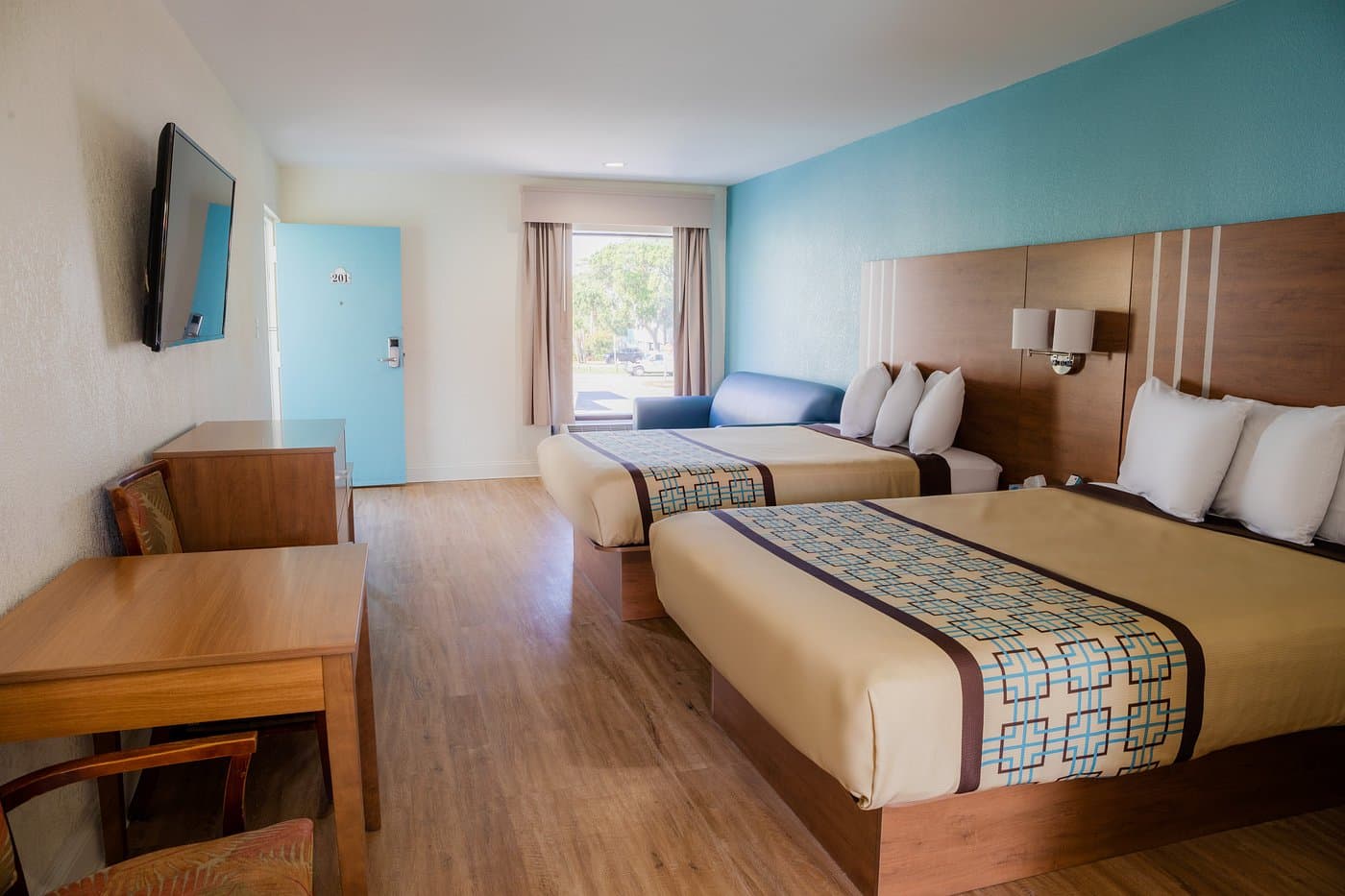
A family that wants a base can look at our rooms, and the Kitchenette rooms have a mini-fridge and microwave, which helps with picnic lunches and snacks for a beach morning. Not every room has them, so check the room page. Pets are allowed at the hotel, though not on the beach, since dogs are banned on every Tybee beach year-round. The fee is $25 per pet, per night. In the off season, it's $25 per pet for the first night, then $10 per pet per night after that.
For rates and current packages, see our special offers.
One last tip: bring a small container, keep the first tooth in a pocket where it can't get lost, and don't give up in the first ten minutes. Most hunters say the trick is simply staying with it until your eyes learn what they are looking for.
FAQ
Common questions.
Where is the best place to find shark teeth on Tybee Island?
The north end of the beach, near the rocks and the old battery, is the best-known spot for do-it-yourself hunting, especially after a storm. Whatever stretch you pick, the timing matters more than the address: search the shell beds on a falling or low tide.
What is the best time of day to look for shark teeth on Tybee?
There is no single best hour, because it follows the tide. Look on a falling tide and around low tide, and check the NOAA tide predictions for the Fort Pulaski station (8670870) to see when low water falls on the day you are there.
Can you keep shark teeth you find on Tybee Island?
On the public Tybee beaches, yes, that is the whole point of the hobby. Inside Fort Pulaski National Monument it is different. The National Park Service generally prohibits collecting natural objects, fossils included (36 CFR 2.1), so look there and leave what you find.
Is there a guided shark teeth tour on Tybee?
Yes. Tybee Shark Teeth Tours, listed on the Visit Tybee site, runs a shoreline walk of about an hour that is open to all ages and teaches you how to spot teeth. Booking ahead is the norm and prices vary by tour, so check the operator for current options.
Is there an island on Tybee where you can find shark teeth?
Locals sometimes call the marsh islands in the back river 'Shark Tooth Island,' but that is an informal nickname, not an official place name. Boat charters, including Sundial Charters, run trips out to those islands for tooth hunting. Go with an operator rather than trying to find it yourself.
Planning a trip to Tybee?
We’re on Butler Ave, a short walk from South Beach — with an outdoor saltwater pool, free parking, and seven room types across two buildings.
Check AvailabilityMore places to stay on Tybee
From the same family of island hotels.